

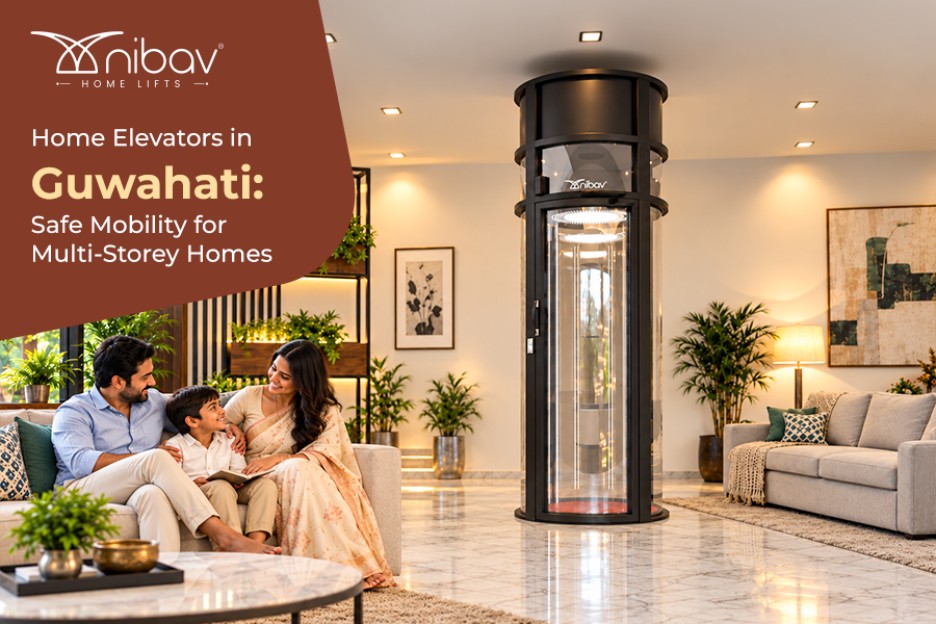
Guwahati has been building upward quickly. In areas like Ulubari, Chandmari, Uzan Bazar and Kahilipara, builders are replacing the old single-floor Assam-type houses with concrete houses that have three or four floors. Newer areas like Beltola, Six Mile, Basistha and Jalukbari are full of multi-floor family homes. In many of them, the ground floor is rented out as a shop or office, and the family lives on the floors above.
More floors mean more stairs, so many families now see a home elevator as a real need. But in Guwahati, choosing a lift is not only about comfort. The city is in one of India’s most earthquake-prone zones; many areas get flooded during the monsoon, and some homes are built on hill slopes. That is why safety must come first. This article explains how to choose and install a lift that keeps your family safe.
Why Safety Matters More in Guwahati
Earthquake Risk
Guwahati lies in seismic zone V, the highest-risk category in India. The region has a history of major earthquakes, including the great Assam earthquake of 1950. Any change to a building’s structure, including installing a lift, must account for these factors.
Waterlogging and Flash Floods
Areas such as Anil Nagar, Nabin Nagar, Rukminigaon and parts of Zoo Road are known for waterlogging after heavy rain. Water entering the ground floor can damage electrical equipment and create hazards for any lift with a pit.
Hillside Homes
Many Guwahati homes are built on or near hills such as those around Kharguli, Sarania and Narakasur. Uneven ground and slope stability need attention when planning any structural work.
Power Interruptions
Storms during the monsoon and pre-monsoon season can cause power cuts. A lift must be able to handle outages safely.
Structural Safety
Get a Qualified Engineer
Before installing a lift, have a structural engineer assess your building. They should check:
- Whether the slabs and beams in the proposed area can be safely opened.
- Whether the building’s overall design can handle the change in a high seismic zone.
- Any signs of cracks, settlement or weakness.
Choose a Lightweight, Self-Supporting Lift
A lift that stands on its own frame puts less load on the building than a heavy concrete shaft. In an earthquake-prone city, keeping added weight low is a sensible principle.
Follow Building Rules
For new homes, include the lift in plans approved by the Guwahati Metropolitan Development Authority or Guwahati Municipal Corporation. For existing homes, check whether structural changes need permission.
Factors To Stay Cautious During Flood Safety:
Avoid Deep Pits in Low-Lying Areas
A pit below the ground floor can fill with water during heavy rain, damaging the lift and creating risks. In waterlogging-prone areas, pitless lifts are the safer choice.
Protect Electrical Components
Ask suppliers where the lift’s electrical parts are located and how they are protected from water. Components placed higher up or properly sealed are less likely to be damaged.
Think About the Ground Floor Entry
If your ground floor regularly takes in water, consider raising the lift’s entry point slightly or improving drainage around the lift area.
Power Safety Features For Multi-Storey Houses:
Battery Backup
The lift should have battery backup or an emergency descent system that safely brings the cabin to the nearest floor during a power cut.
Stable Power Supply
Check the lift’s power requirements and whether your home’s supply is adequate. Voltage fluctuations can affect electrical equipment, so ask whether a stabiliser or protection device is needed.
Everyday Safety Features To Check in Home Lifts:
Beyond Guwahati’s specific risks, look for these features in any home lift:
- Door interlocks:The lift would not move unless doors are closed.
- Obstruction sensors:These stop doors from closing on people or objects.
- Overload protection:This feature prevents operation when the weight limit is exceeded.
- Emergency communication:An intercom or phone inside the cabin.
- Manual release:A way to safely open the cabin in an emergency.
- Child safety:Features or settings that prevent young children from using the lift unsupervised.
Safety Rules For Family Usage:
A safe lift also depends on how it is used. Set simple family rules:
- Do not use the lift during an earthquake. Stay where you are and follow standard earthquake safety guidance.
- Avoid using the lift when water is entering the ground floor.
- Do not overload the cabin with heavy items.
- Keep children supervised.
- Report any unusual noise or movement to the service team immediately.
Maintenance Tips:
Regular maintenance keeps a lift safe. Choose a supplier with a service team in Guwahati, and agree on a maintenance schedule that includes checks after heavy monsoon seasons or any noticeable earthquake.
A Practical Example
Picture a family living in a four-storey house in Beltola. The ground floor is rented to a pharmacy, the parents live on the first floor, and their son’s family lives on the second and third floors. The lane outside floods during heavy rain, and the father, who has Parkinson’s disease, finds the stairs increasingly unsafe.
Before installing a lift, the family had a structural engineer check the building. He confirmed that a compact lift beside the staircase was feasible and recommended a lightweight, self-supporting model. Because of the flooding, they chose a pitless design with well-protected electrical parts. The lift includes battery backup, an intercom and door sensors. The father now moves between floors safely, and the family has a clear plan for using the lift during monsoon storms.
Conclusion
A home elevator can make multi-storey living in Guwahati much easier, but safety must guide every decision. Plan for earthquake risk with a proper structural assessment and a lightweight lift, protect against waterlogging with a pit-less design and well-protected electricals, make sure power cuts are handled safely and choose strong everyday safety features.
With careful planning and regular maintenance, a lift becomes a safe, reliable part of your home. If you are exploring options, Nibav Lifts offers home elevators in Guwahati designed for independent homes, and a site visit can help you choose a safe solution for your house.
You May Like